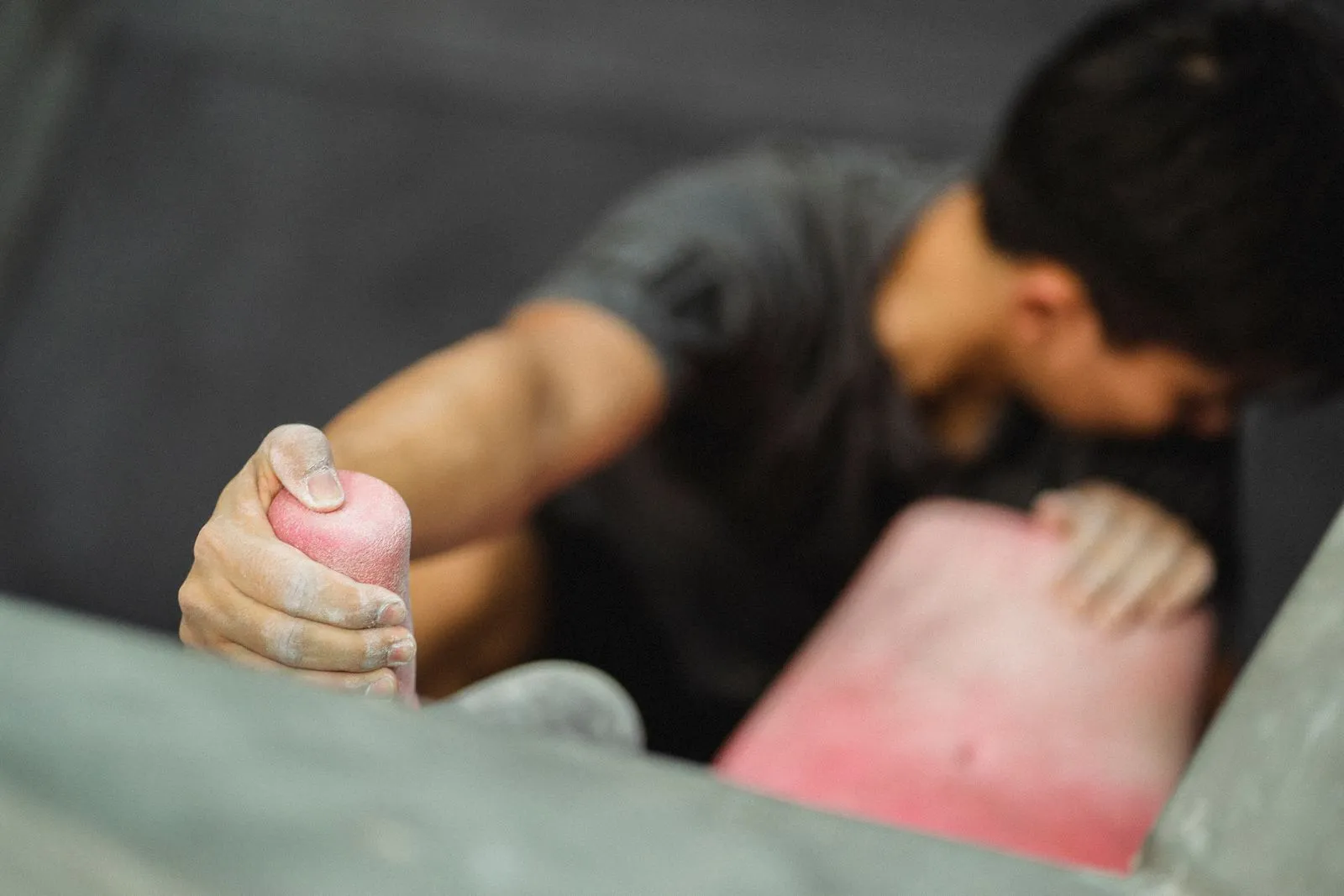
Stronger grip can help you stay on holds longer, but finger tendons adapt more slowly than muscles. That makes gradual training and recovery just as important as effort. You do not need to start with tiny edges or maximal hangs to make progress. Begin with manageable climbing, build general pulling strength, and add finger-focused work only when your hands feel healthy. These practical steps can help you develop climbing grip strength while reducing the risk of overloading your fingers.
Start With Climbing and Technique
Regular climbing provides useful grip practice across different hold shapes and angles. Choose routes or problems you can complete with controlled movement, and focus on placing your feet accurately, keeping your arms relaxed, and avoiding sudden yanks. Better movement often reduces how hard you need to squeeze. If your grip fades, stop or switch to easier climbing rather than repeatedly testing your limit.
Warm up before harder attempts. Start with easy movement, then gradually try slightly more demanding holds and climbs. Pay attention to how your fingers feel during and after the session. Mild muscle fatigue can be expected, but sharp pain, swelling, or tenderness around a finger joint or tendon is a reason to stop finger loading and seek guidance from a qualified health professional.
Build Supporting Strength
Strengthen the muscles that support climbing with controlled rows, assisted pull-ups, and scapular pulls. Use a load that lets you keep good form, and leave a little effort in reserve rather than grinding through repetitions. These exercises develop pulling capacity without requiring you to hang from small holds. Add them one or two times a week, allowing recovery between demanding sessions.
A light resistance band can also train the hands and forearms through a comfortable range. Try opening your fingers against the band, then relax; keep the movement smooth and avoid forcing your fingers into pain. Balance gripping work with finger-opening exercises and general shoulder strength. These movements support a well-rounded routine, but they do not replace rest or careful progression.
Add Finger Training Gradually
Once you climb consistently without finger pain, consider brief, submaximal hangs on a comfortable, large hold. Keep your feet on the floor or use a band for assistance so you can control the load. Maintain a steady position, avoid swinging, and stop well before failure. Start with a small amount of work, then repeat the same level over several sessions before considering a modest increase.
Do not jump straight to small edges, added weights, or all-out hangs. Change only one part of the workout at a time, such as hold difficulty or total hanging time. If discomfort appears, end the exercise; do not try to train through finger pain. Beginners and anyone returning after an injury should get individualized advice from a climbing coach or medical professional before adding structured hangboard work.
Plan Recovery and Track Progress
Give your fingers time to recover between strenuous grip sessions. Avoid stacking hard climbing, hangboard work, and intense pulling exercises on consecutive days when your hands feel fatigued. Sleep, regular meals, and easier movement days support recovery. If soreness or stiffness lingers, reduce the next session’s intensity or volume rather than trying to make up missed training.
Keep a simple log of the exercises, hold type, assistance, and how your fingers felt during and the day after training. Progress means completing controlled work with healthy hands, not simply hanging longer. Adjust your plan if you notice recurring tenderness or declining performance. A coach at Miami Climb Lab can help you choose appropriate drills and match them to your climbing experience.
Build grip through steady climbing, supporting strength, and carefully scaled finger work—not repeated maximum efforts. Keep sessions controlled, track how your hands respond, and allow recovery before increasing the challenge. If pain persists or you are unsure how to progress, consult a qualified professional or ask a climbing coach for help planning your next steps.